How to Choose the Right Bend Radius for Plastic Drag Chains
How to Choose the Right Bend Radius for Plastic Drag Chains
How to Choose the Right Bend Radius for Plastic Drag Chains is a practical question for OEM machine builders, overseas importers, and maintenance teams. A well-selected bend radius for plastic drag chains protects moving cables, reduces downtime, and makes machine wiring easier to inspect. The wrong choice can create repeated cable abrasion, noisy operation, broken links, and urgent replacement cost. This guide explains the selection logic in an engineering-friendly way so buyers can compare options before ordering.
Why bend radius for plastic drag chains Matters for Automation Buyers
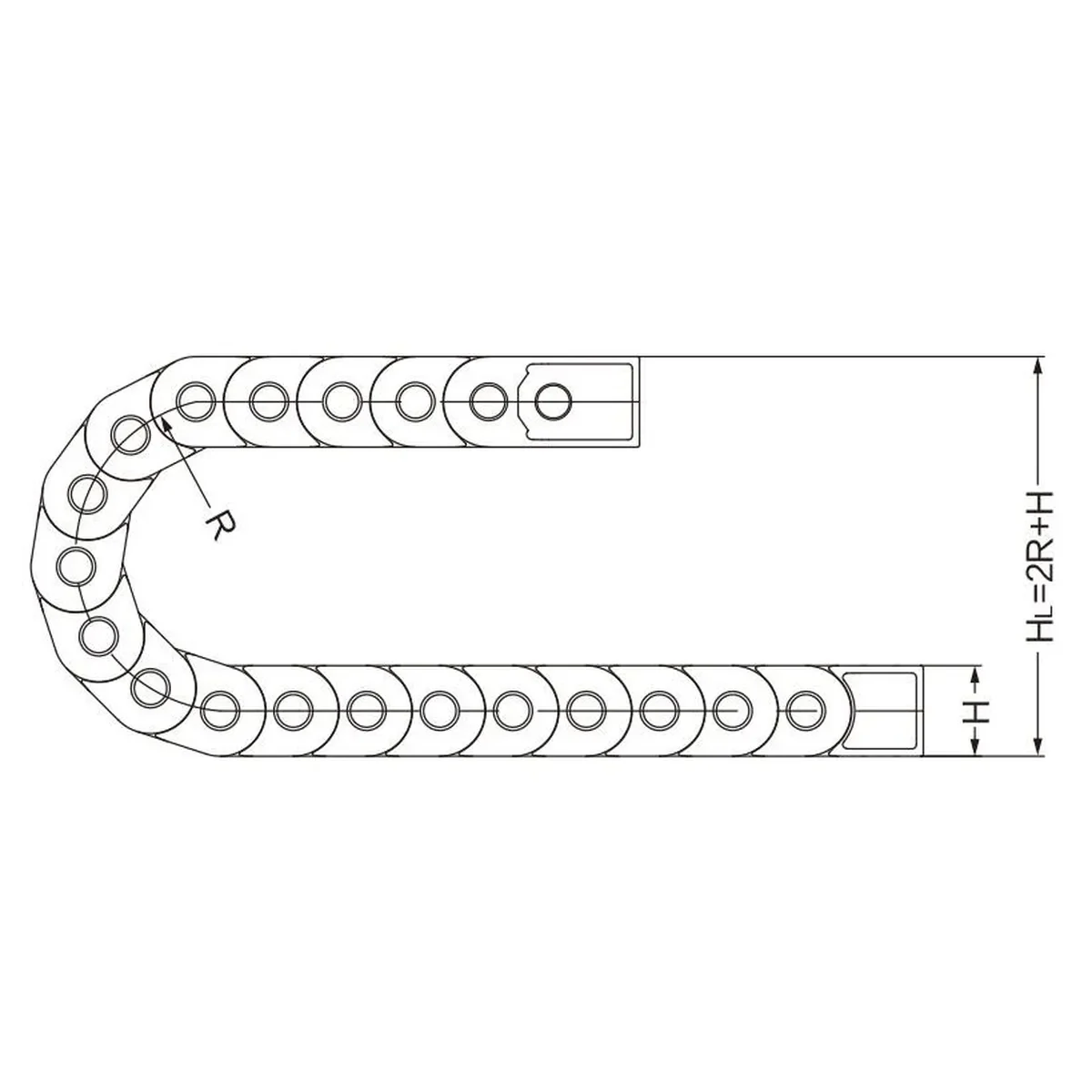
The bend radius for plastic drag chains is part of the moving cable protection system. It guides cables and hoses through a repeatable path while the machine axis, robot, conveyor, or tooling unit moves. When the drag chain is sized correctly, the cable package bends smoothly and stays separated from sharp edges, chips, coolant, and other moving parts. When it is selected only by price or outer appearance, the equipment may suffer from early cable fatigue, unstable signals, and extra maintenance work.
For international buyers, the cost of a drag chain is not limited to the unit price. Freight, lead time, installation labor, emergency replacement, and production downtime all matter. A slightly better chain can be cheaper over the full equipment life if it prevents one unplanned stop. This is why WYW Motion focuses on size confirmation, material matching, CAD support, and sample support before bulk orders.
Core Selection Factors
Start by listing every cable, hose, and tube that will move inside the chain. Record outer diameter, quantity, minimum bend radius, weight, connector size, operating speed, stroke length, and working environment. Then choose inner height and inner width with enough clearance. Cables should not be squeezed tightly. They need space to move naturally during repeated cycles.
- Confirm the focus requirement: bend radius for plastic drag chains.
- Choose PA66 material for a strong balance of wear resistance, toughness, and cost performance.
- Match bend radius to the most demanding moving cable or hose.
- Leave internal clearance instead of filling the chain completely.
- Use separators when power, signal, air, oil, or data cables share one carrier.
- Check end fittings, strain relief, travel length, unsupported span, and mounting direction.
Application Conditions to Review
Different machines need different drag chain details. CNC machine tools may require better chip, coolant, and oil resistance. Robotic arms need flexible routing around moving joints. High-speed packaging lines care about low noise, smooth link movement, and long cycle life. Long-travel systems may need guide troughs, support rollers, or support saddles. Before confirming the model, buyers should share machine photos, installation space, travel length, and cable list whenever possible.
| Selection Point | What to Check | Why It Matters |
|---|---|---|
| Material | PA66, reinforced nylon, anti-static option | Affects strength, wear life, and operating temperature |
| Bend radius | Cable and hose minimum radius | Prevents cable fatigue and early failure |
| Inner size | Cable diameter plus clearance | Reduces friction and heat inside the carrier |
| Environment | Dust, oil, chips, coolant, temperature | Decides open, closed, or special material choice |
| Support | CAD drawings, samples, technical confirmation | Reduces ordering mistakes for OEM buyers |
Common Mistakes That Reduce Service Life
Many drag chain problems come from avoidable selection and installation mistakes. One common issue is choosing a chain that is too small because the machine space is limited. Another is mixing heavy hoses with sensitive signal cables without separators. Some buyers also ignore connector size, so cable replacement becomes difficult after the machine is assembled. A correct bend radius for plastic drag chains plan should consider both operation and future maintenance.
- Do not force cables into a narrow cavity.
- Do not choose bend radius only from chain availability; check cable data first.
- Do not install cables with twist or tension.
- Do not ignore moving-end and fixed-end strain relief.
- Do not use the same drag chain type for every machine environment.
How WYW Motion Helps with Sourcing
WYW Motion supports overseas customers with model selection, CAD drawings, sample confirmation, and practical communication before mass production. If you are comparing bend radius for plastic drag chains options for OEM machines, automation lines, or replacement projects, our team can help check size, fitting type, material, and estimated delivery plan. This makes the sourcing process easier for importers who need stable quality and repeatable supply.
FAQ
What information is needed before buying a bend radius for plastic drag chains?
Prepare cable quantity, cable outer diameter, cable minimum bend radius, travel length, installation space, operating speed, acceleration, environment, and mounting direction. Photos or CAD drawings make the selection more accurate.
Can WYW Motion provide samples for a bend radius for plastic drag chains project?
Yes. WYW Motion can provide sample support for suitable projects. Samples help buyers confirm material quality, link movement, end fitting style, and installation compatibility before larger orders.
How can drag chain selection reduce total cost?
Correct selection reduces cable wear, prevents emergency replacement, shortens troubleshooting time, and improves machine reliability. For OEM buyers, it also reduces after-sales issues and improves customer confidence.
Free consultation, CAD drawings, sample support. Contact WYW Motion with your cable list, travel length, machine photos, or drawing requirements.
Explore more technical articles on the WYW Motion Blog, learn about the company on About WYW Motion, or send requirements through Contact Us.
For general background, you can also review the public definition of an energy chain.