
How to Choose the Right Plastic Drag Chain for High-Speed Automation: 6 Key Factors
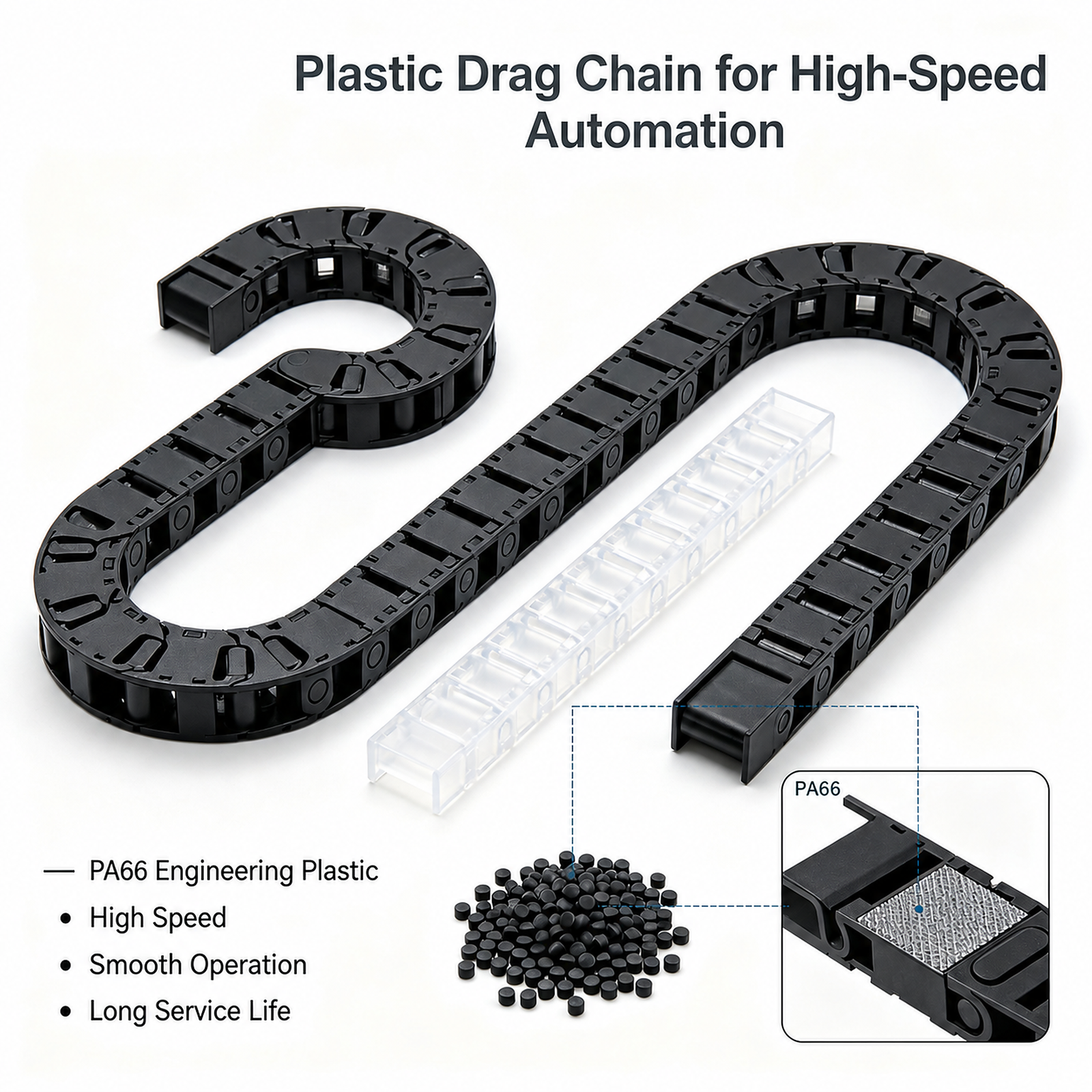
1. Plastic Drag Chain Material Selection
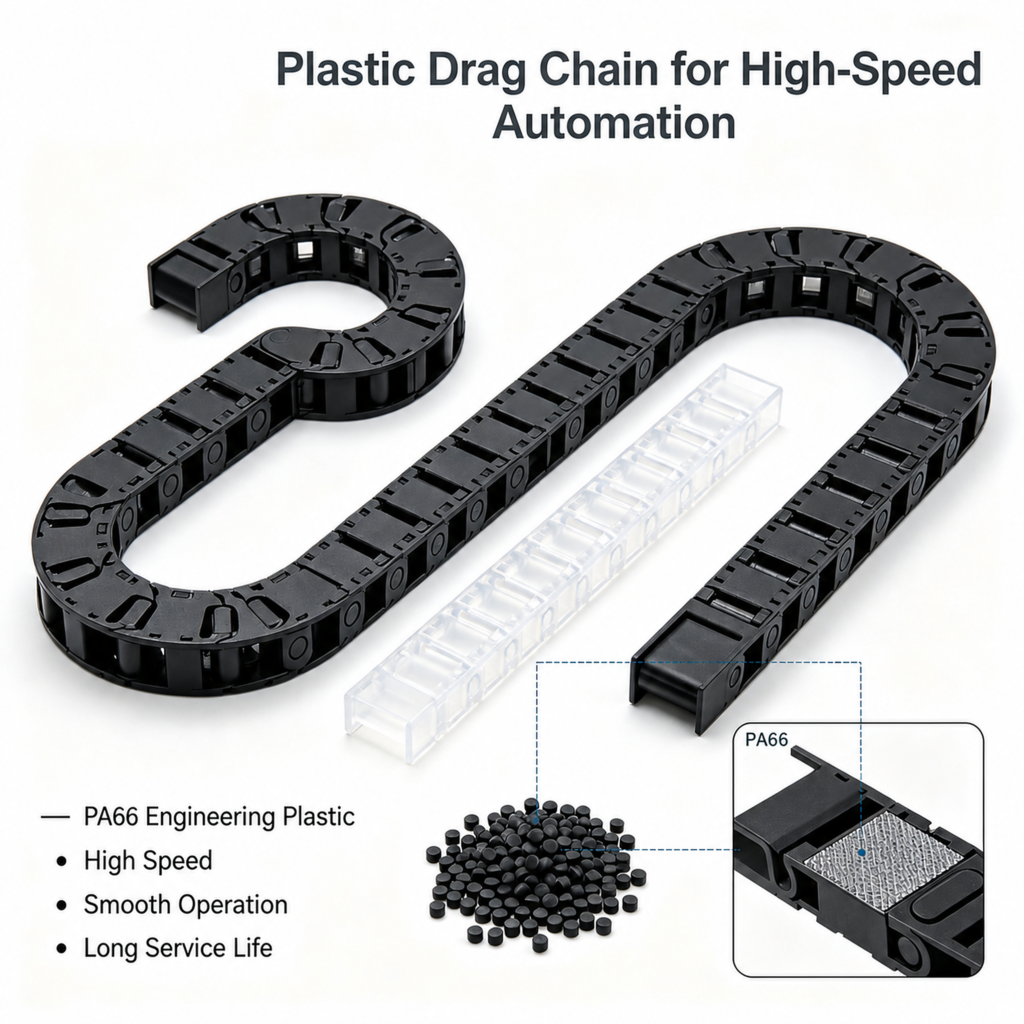
When choosing a plastic drag chain material, consider the three most common options: PA66 (Nylon), POM (Acetal), and PBTP. Each material offers distinct advantages depending on your application requirements.
PA66 is known for its excellent mechanical strength, high-temperature resistance (up to 120°C), and good flame retardancy (UL94 V-0 rated). POM delivers superior wear resistance and low friction, making it ideal for high-speed, high-frequency applications. PBTP offers a balance between chemical resistance and dimensional stability.
For most automation applications, a plastic drag chain made of PA66 offers the best balance of strength, thermal stability, and cost-effectiveness. However, if your system runs at extremely high speeds, POM may be the better choice. For high-temperature environments exceeding 100°C, PA66 is the clear winner. Always check the material’s continuous operating temperature rating before making your final decision.
2. Bend Radius Calculation for Plastic Drag Chain
The bend radius is the most overlooked specification when buying a plastic drag chain. Simply put, bend radius is the minimum radius that a cable carrier can bend without causing stress damage to the cables inside. It directly determines the installation height of your drag chain system. (Learn more about the basic definition on https://en.wikipedia.org/wiki/Energy_chain.
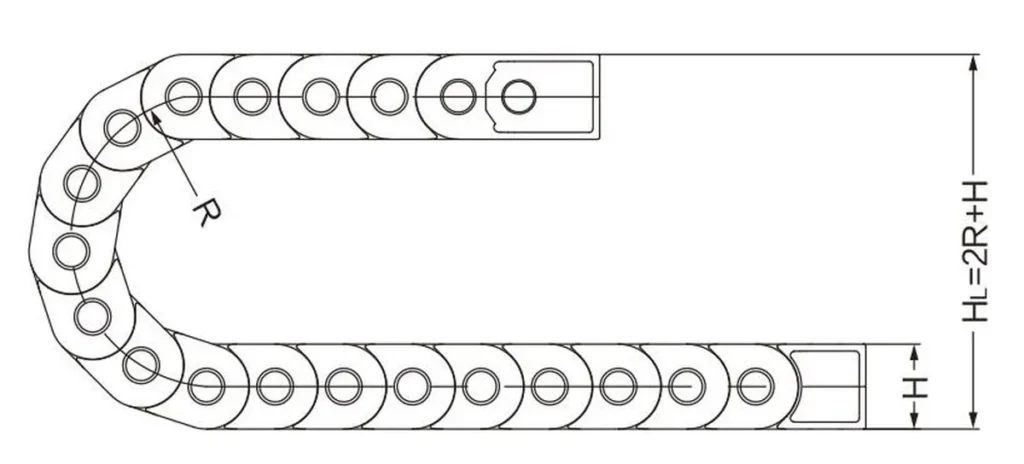
The basic formula to remember is: Installation Height = Bend Radius × 2. For example, if your cable requires a minimum bend radius of 100 mm, your drag chain must have a bend radius of at least 100 mm, requiring an installation height of 200 mm.
Choosing the wrong bend radius leads to serious consequences. If the radius is too small, cables will kink, fatigue prematurely, and eventually fail. This not only shortens cable life but also increases downtime and replacement costs. Always verify the minimum bend radius of both your cables and your plastic drag chain to ensure compatibility and long-term reliability.
3. Maximum Travel Speed and Acceleration
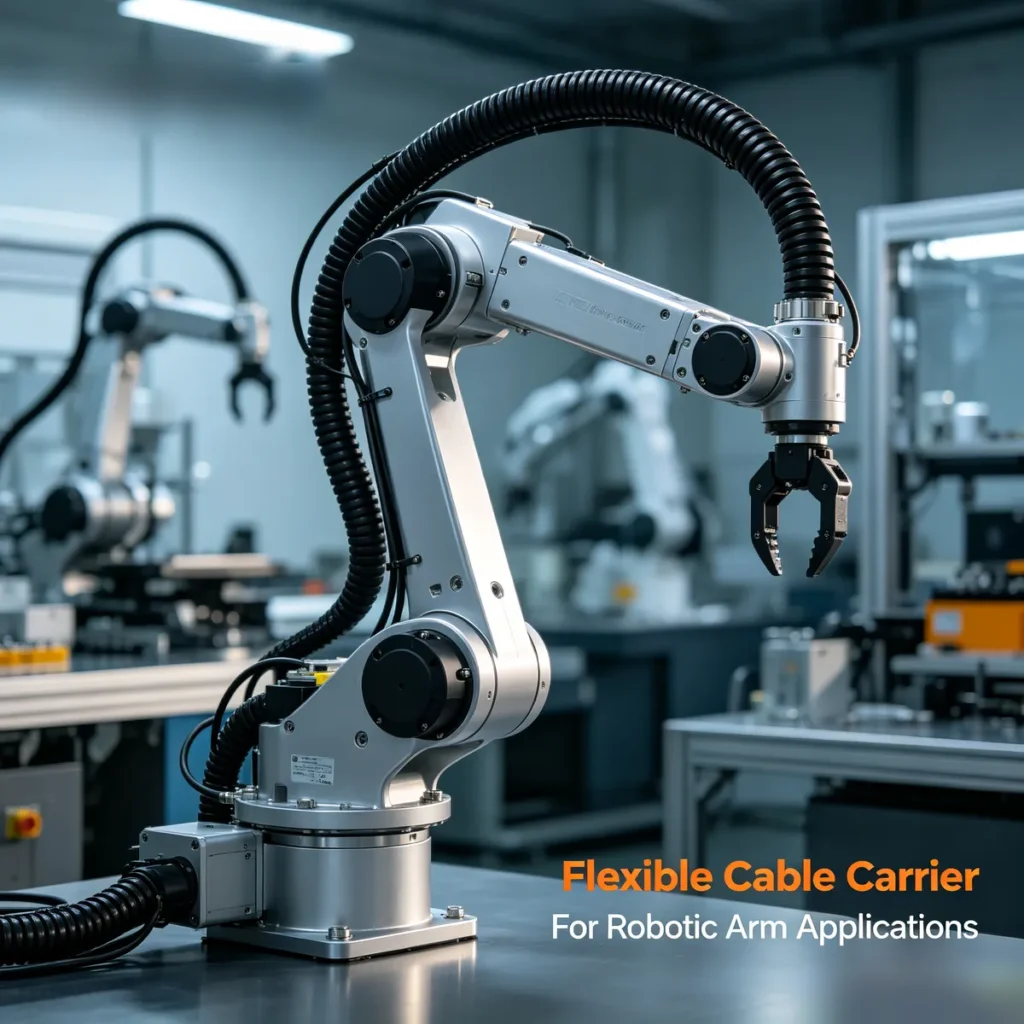
Speed is a critical factor in drag chain selection. The industry generally defines a travel speed of 3 m/s as the threshold between standard and high-speed applications. Anything above 3 m/s requires a specially engineered plastic drag chain.
For high-speed applications, your plastic drag chain must be rated for at least 5 m/s travel speed to ensure reliable operation. But speed alone isn’t enough—you also need to consider acceleration, specifically jerk (the rate of change of acceleration). High jerk values create shock loads that can cause premature wear on the chain links and pins.
There is a direct relationship between speed and service life: the faster your system runs, the shorter the drag chain’s lifespan. Most manufacturers provide speed curves and acceleration limits in their product documentation. Select a plastic drag chain with speed and acceleration ratings that exceed your maximum operating conditions to provide a safety margin.
4. Noise Level Control

Noise is a growing concern in modern manufacturing facilities, especially for high-speed automation equipment. The primary sources of noise in a plastic drag chain are the impact of chain links hitting the stoppers and the vibration generated during rapid acceleration and deceleration.
A well-designed plastic drag chain with stoppers can reduce noise by up to 10 dBA. Stoppers act as cushioned bumpers that absorb impact energy at the end of each travel stroke. Additionally, some manufacturers offer low-noise material formulations specifically designed to dampen vibration and reduce operational sound levels.
Laboratory tests show that a standard plastic drag chain without stoppers typically generates noise levels around 75-80 dBA at 5 m/s, while the same chain equipped with stoppers measures approximately 65-70 dBA. This 10 dBA difference is significant—it’s roughly the perceived loudness difference between a vacuum cleaner and normal conversation.
5. Service Life Prediction
Most manufacturers provide a service life chart for their plastic drag chain based on travel distance and speed. These charts are derived from fatigue life testing, where chains are run continuously at various speeds and loads until failure occurs. The most common standard for this testing is the VDI 3006 guideline.
To calculate the expected service life of your plastic drag chain, you need three pieces of information: total travel distance per cycle, number of cycles per hour, and operating hours per day. Multiply these values to determine the total annual travel distance, then compare it against the manufacturer’s life chart.
As a general rule of thumb, replace your plastic drag chain when it reaches 80% of its rated service life. This leaves a safety margin and allows you to schedule maintenance during planned downtime rather than dealing with unexpected failures. Regular inspection—checking for cracks, wear marks, and loose pins—is equally important. At https://www.wywmotion.com/about/ we provide detailed maintenance guides for all our plastic drag chains.
6. Total Cost of Ownership
Investing in a premium plastic drag chain reduces TCO by minimizing replacement frequency and downtime. While the initial purchase price of a high-quality drag chain may be 30-50% higher than a budget alternative, the long-term savings are substantial.
Consider the hidden costs of a low-quality plastic drag chain: unplanned production stops (often costing hundreds or thousands of dollars per hour), emergency replacement parts, expedited shipping fees, and overtime labor for off-hours repairs. One unexpected failure can easily erase any upfront cost savings.
A premium plastic drag chain typically lasts 3-5 times longer than an economy-grade alternative in the same operating conditions. It also maintains tighter tolerances, reducing cable wear and further extending the life of your cables and hoses. When calculating TCO, factor in purchase price, installation cost, maintenance frequency, replacement cycles, and downtime losses. In most cases, the premium option is significantly more cost-effective over the equipment’s full lifecycle. Explore our full range of high-quality to find the best fit for your application.
Contact Us for More infohttps://www.wywmotion.com/contact.html
FAQ
What is the best plastic drag chain material for high-speed automation?
PA66 is a strong all-around choice for many automation systems, while POM can be useful for very low-friction, high-cycle motion. The best option depends on speed, temperature, cable load, and service-life requirements.
Why is bend radius important for a plastic drag chain?
The bend radius protects moving cables from fatigue. If the radius is too small, cables can kink, crack, or fail early, causing downtime and higher replacement cost.
How can a plastic drag chain reduce downtime?
A properly selected drag chain controls cable movement, reduces abrasion, keeps cables organized, and makes maintenance easier to plan before failures stop production.